Sunday, April 08, 2012

Forager's Sickle

Forager's Sickle


Well th' forager's sickle is finished, and not a moment too soon. As you may know if you've seen our foraging blog, th' harvest is already ripe for th' pickins, and what's a forager without a "forager's sickle?" Answer- us until yesterday. Th' blade is a replica of a bronze age sickle found in Scotland, and was made for me by an excellent knife maker. You can read more about it on th' Buschcraft UK forum here. He also made a beautiful sheath for th' blade as well. Th' handle is a piece of wild apple wood carved with another of Joel's knives, a copy of a medieval woodworking knife. You can read about that little knife on Joel's blog. So far i'm really liking carving with it, and the elm bowl in th' last post was also carved with it, with the exception of th' hollow of course.

sickle showing plug, and carving knife


Here's a few pictures showing th' hafting of blade to handle, I used a black walnut plug, and red deer sinew spun on a drop spindle and dipped in hide glue, as it would've been done in th' bronze age. That's real hide glue, not th' tite bond brand from th' hardware store which has chemical retarders in it. Now it's off to th' field to put it to use. No doubt you'll be seeing it in pictures on th' foraging blog from now on. Enjoy!

sinew soaking, ready to spin

sinew, spun on low whorl spindle

spun sinew soaking in hide glue

wrapping th' sinew


Of course, a pot of green tea  is crucial to th' job


close up of sheath

a good coat of hide glue on top for extra protection.

Happy Easter!
~Rico

Thursday, April 05, 2012

How (and Why) to Enjoy Dandelions


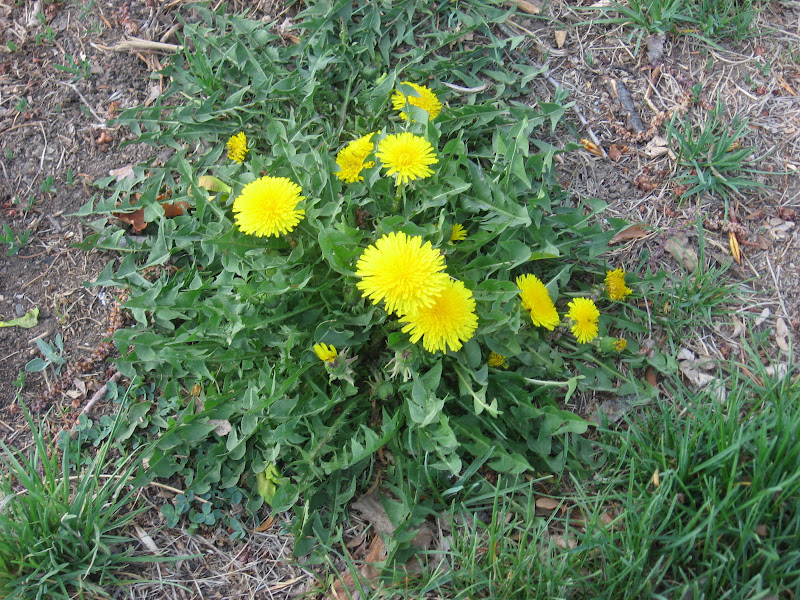
Dandelion flowers, early spring


Dandelions. We love 'em- we hate 'em. We love th' signal of spring in full swing- and a field of yellow flowers instantly transports us to our childhood days. To days when wishes were made by blowing puff balls all over th' yard. Laughing in silly glee. That was before we knew th' neighbors were cringing at th' thought of those lovely wishes landing in their yard and growing a hundred fold more wishes.

dadelion "puff ball"


Why is it that grown ups don't make wishes? Have not enough of them come true? Have they made th' wrong ones? Have they lost all hope? I say "they" as though i were not one- but truly, being grown up is a mentality- and one that dandelions battle with in all of us- either one way or the other.
However, being th' grown-ups that some of us are- we don't have to rely on wishes alone for th' dandelion to be a sacred part of our lives. For it is one of th' most nourishing foods we will ever eat. And, yes, you can even enjoy eating them. With a little time and attention, a little preparation, and those lovely little plants that we've been unable to kill with all our millions of tons of poison can actually taste good, and take care of us too. And how's this for a role model of forgiveness- by eating them, they can actually de-toxify our body of th' poisons that we've so ruthlessly lavished upon them. Among it's many medicinal uses, it's best known as a purifier of th' liver and kidneys, and has been used historically for gall and kidney stones. Being good for th' inside, it's also good for th' outside. With less toxins inside our body, less toxins will be released through our skin, thus it will be healthier. We will be healthier. With practically everyone we know getting cancer, and despite doctors claims, very few of them actually surviving it, de-toxifying sounds like a good option to me. In this case, prevention is the only medicine.

Honey bee on dandelion


Dandelions are also high in vitamins A and C, Beta-Carotine, Potassium and Iron. Persistent little buggers, ain't they. But i do realize that knowing something is good for you is simply not enough to make us go out and eat something we believe tastes absolutely repulsive. But, like all true treasures in th' world, There is a gem hiding, if you're willing to put in th' effort. Which, in th' case of dandelion, is usually not much. Just cook th' dang things like spinach. Use a little oil, or butter, or bacon grease- it'll taste fantastic and you'll be able to serve it to th' pickiest of palates. If you want to go a little bit further, you can selectively pick them for least bitterness, here's how: look for ones that have not yet grown a flower stalk- look for fast growing ones, usually in a moist location- and sometimes, though not always, look for ones with fuller, less saw-tooth shaped leaves. These are good indicators that th' flavor will be at it's best.


We use them, along with many other wild greens, in dishes where you would use spinach. It goes great in Quiche, sauteed with a bit of bacon or olive oil, omlets, enchiladas, soups, you name it. If you could put some greens in there, then dandelions will work. For some more great recipes using dandelions and other wild foods see th' blog Hunger and Thirst for Life.
And for some more great reading on th' value of common yard "weeds", check out Doc Weed's Doin's, this guy is a dandelion expert, and travels around teaching folks about th simple, yet overlooked, plants growing all around them. He lived through th' Great Depression eating weeds, and has a lot of really pertinent stuff to say about it.


Of course there's always th' famous "Dandelion Coffee"- see th' picture at th' top of our blog? That's not coffee, it's roasted dandelion root. This drink is quite bitter, perhaps we always make it too strong, and we'll experiment with it some more. We chopped th' roots to as even a consistency as we could, then roasted them in the oven on a cookie sheet till they turned dark brown, and smelled really good. Then just grind 'em up and brew like coffee, though use a little less dandelion root per amount of water than you would with coffee. I like to overdo it, but then no one else will drink it. Nevertheless, a nice warm drink is a good way to enjoy it's many health benefits.  Mix it with cream and sugar, or other herbs to make your own blends.


Once you get used to dandelions as food, you'll find yourself getting cravings for them. We like to eat th' flowers right off th' plants, and they also make a good salad topping. Our four year old friend and foraging companion Nohea was out in th' yard eating dandelion flowers, with her parents knowledge of course, and th' neighbors were looking on horrified. Hey- don't you know your kids are eating weeds! Yeah, they do it all th' time. Th' flowers are th' ingredient used in th' familiar dandelion wine, you can find numerous recipes for that online. We're not very skilled at making alcohol, but we did end up making some vinegar instead a few times.


The other day i walked into our local food co-op and, after being assaulted by "buy local" and "ride your bike" signs, saw that they had dandelion greens for sale. Being th' dandelion lover i was instantly drawn closer. That's when i saw that they were actually trucked over from California. That's just not right, i thought. For a month now dandelions have been popping up all over town, and folks have been out in th' yard spraying poison to try, in vain, to stop them. Folks, we're supposed to be the examples of a better- cleaner, healthier world. There is just no excuse or valid reason to burn however many gallons of diesel fuel it takes to get a truck from California to Colorado to buy something that we've been poisoning right in our own front yard. There's a big warning sign here, and if we don't see it it's not because it's not clear, but because we've forgotten how to read. A diversity of food will keep us healthy. Along with dandelions, here's some more common weeds that used to be used as food, are very nutritious, and would be in most peoples yards if only we'd let them. Dock, Amaranth, Lambs Quarters, Mustards, Mallow, just to name a few. And these foods will grow without our help. No more watering th' lawn with extravagant summer water bills, no more money spent on fertilizers and pesticides! No more expensive loud exhausting lawn mowers! Do you see i'm trying to appeal even to our pocket-books here? It's time we start seeing a new vision, one not of unsustainable lawns in th' high desert, but rather, a highly nourishing garden. So go ahead, make a wish.

Sunday, March 25, 2012

Spring Foraging Weekend

Well May 15th may be planting day here in northern Colorado, but th' harvest is already ripe for th' pickins. On Saturday we spent th' day in th' mountains, near Poudre Canyon, and what a stunning day it was. Th' first fruits to greet us were th' juniper berries.

Rocky Mountain Juniper Berries in spring.

I crushed up a handful and sprinkled it atop a quiche we brought with us for lunch, and a fine compliment it was. But even better was one, yes one lonely berry, bruised and dropped inside a bottle of sparkling water. A more refreshing drink is hard to find. Fynn just ate th' berries raw, one after another. Here he is now popping one into his mouth.

Fynn eating juniper berries
After lunch we wandered around a bit, and found some neat little burrows dug all through th' grass, dirt, and even snow. Field Mice? Not sure.


Without waiting to solve that mystery, we kept on exploring. Following a mostly dry, at this time of year, creekbed led us to some new growth of cow parsnip.

Cow Parsnip, early spring growth
Here's last years seeds, one of th' major identifying characteristics at this time of year.

Cow Parsnip seeds and stalks.
These are really good eating, (not at this stage of course) reminiscent of celery with it's clean, slightly numbing after taste, but, like everything in th' Rockies, quite a bit stronger. Cow Parsnip was a favorite food of many native americans, one taste of it's stalk and you'll know why. Please don't eat hemlock though, thinking it's a Cow Parsnip. Especially with foods in th' carrot family, know what you're eating, or don't eat it.  One bite of hemlock will kill you. We have a friend who barely survived an encounter with it, and she didn't even eat any of it, just touched it to her tongue.

Not far from th' parsnip we started getting tangled up in briars. Good news when you know that means mountain raspberries in th' summer. Here's a close up of a cane from last year, and then a whole hillside covered in canes. We'll make sure to save some for th' bears.

raspberry cane

lots of raspberry canes.
 Then we spent some time enjoying the enormouse Ponderosa pines. Th' bark of  these trees smells like vanilla. We all took a sniff, and Fynn licked th' tree a few times, just like he did with th' maple sap earlier this year.

Ponderosa Pine


Beth gathered some needles for pine needle tea. High in vitamins C and A, this tea is also an expectorant and decongestant, good for preventing and fighting colds. Brew th' needles fresh, and cut off th' sheath at th' base, as this gets pretty sharp tasting if brewed. Here's Beth harvesting some needles, and a cup of brewing tea as well, which we enjoyed as soon as we got home. I added some to a pot of green tea, just a bit, to make a nice Rocky Mountain Green blend.

Beth harvesting pine needles


Pine needle tea
All in all it was a very good day, and being in th' mountains makes us wonder how life ever got so complicated. It's so peaceful up here, and everything you need is provided. When and why did we decide that th' wilderness should be for recreation and sport, instead of our home?


Th' next day we went out to find some curly dock for dinner. Sadly, most of th' field where we've found so much food, as well as wild honey (which we have not harvested, and now won't be able to) was now torn up in preparation for who knows what. Probably more houses. But there was still a small portion left, and we did find quite a bit of dock.

Rumex Crispus, early spring


You know what dock is right? It's th' plant that makes th' big rust colored seed stalks that you see in th' fields from late summer till spring.

dock seeds, and owl feather
This has been one of our favorites this past week. We've been craving fresh greens, not store bought ones, but th' ones that grow just outside our door. Dock actually beats th' dandelion as far as providing fresh greens, and we've been eating them steamed with butter and apple cider vinegar, or olive oil and red wine. They're really pretty fabulous. Beth cooked some up with bacon, and it reminded me of growing up in east Texas eatin collard and turnip greens.

Curly Dock greens, raw


But th' cream of th' crop, literally, came tonight when we made dock "saag paneer".

dock "saag paneer"
This actually tasted like authentic Indian restaurant saag paneer. Here's how i did it, and if you know how to make the authentic stuff, and see that i did it differently, i dare your taste buds to tell th' difference blindfolded.

I took three cloves of garlic, chopped up not big or small, and about a tenth of an onion, sauteed these up with  some butter and olive oil and chili powder. When they got good and brown, i added finely diced dock leaves and a small bit of water and simmered this for about fifteen minutes. Then i added some curri powder, chopped provolone cheese and half and half, till it looked about th' consistency of what i've eaten at th' restaurants. This i simmered on low for about twenty minutes, till it got good and thick, and voila! It really was fabulous.

While we were hunting dock, we found another treat. Do you know what this is?


That's right, it's th' purple mustard, or musk mustard. This plant can cover whole fields, and you often smell it while going about town. It smells kinda like a dirty dish rag, which sounds gross, but when you know it's a flower, it's an absolutely enchanting aroma. These make great field snacks, and a wonderful addition to salads.

purple "musk" mustard.
 And here it is on a nice lunch salad.

salad with mustard greens
Well, we had a fine weekend, and we look forward to th' days to come. I do hope you can say th' same. And as long as there's a speck o th' wild left, we'll enjoy it.

~Rico


Caughtcha red handed!