There are a few frontiers left in th' world today, and th' world of plants is one of them. Even right here in my hometown, there are multitudes of plants that we are still learning about, and many of which we know absolutely nothing. We recently traveled to my homeland of East Texas, and though i spent my childhood here, i've been gone long enough for it to seem like we had entered into a new frontier. From both a cultural and climatic point of view, we might as well have been in a foreign country.
We left Colorado just ahead of a spring snow storm, and when it really set in that we were entering a new land was when i found recently fallen acorns beneath a Texas live oak tree. Note how th' leaves look nothing like our more typical oak trees. These are called live oaks because they are evergreens, uncommon amongst deciduous trees, even in Texas. These were found in north Texas, off old highway 287, near Oklahoma.
 |
| Texas Live Oak |
 |
| live oak acorns |
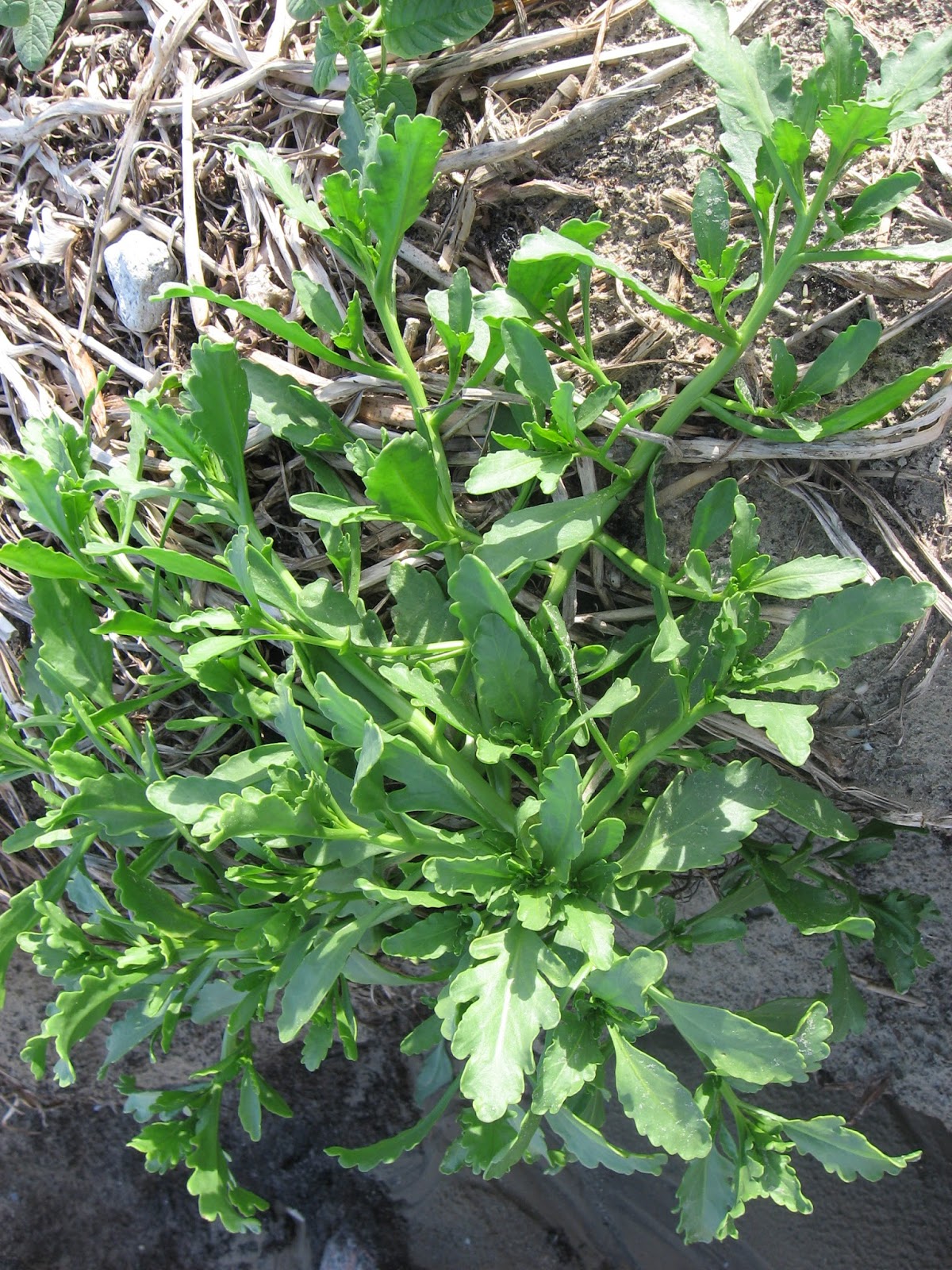
We spent th' night at a rest stop south of Dallas, and awoke to find Wild Carrots all over th' place. Throughout th' rest of our stay we saw more wild carrots than just about any other plant. They grew nearly everywhere, from th' highway medians, to th' ditches to peoples frequently mowed lawns. Wild Carrot does resemble poison Hemlock, please know that you've got th' right plant before even tasting one of these, as one bite of poison hemlock could be your last. We have a friend who, just to prove she had found wild carrot, took a piece of a leaf and bit it, she instantly realized her mistake, but it was too late. She very nearly died. Th' plant she bit was poison Hemlock. Th' most obvious distinguishing feature is that carrots have hair all over them, and hemlock does not. Below are three pictures of wild carrot, and a picture of poison hemlock, and though they are and do look different, in th' field they are surprisingly similar. Be careful. Most poisonous plants just taste bad and you spit them out, no harm done, Hemlock is not like that, one bite and you're in big trouble. Do yourself a favor, and really get to know these guys before eating. With that said, once you know a wild carrot and a hemlock, they are not hard to tell apart, just pay attention. Wild carrot is a good food that should not be overlooked for fear of Hemlock.
 |
| Wild carrot first year rosette |
 |
| sane plant pulled up |
 |
| Wild Carrots adorned all th' roadsides in East Texas |
 |
| Poison Hemlock leaf |
|
|
Here's a picture of th' Texas state flower, th' Blue Bonnet. I love these because they grow in giant patches, amongst all the other wild flowers, and cover th' medians and road sides in brilliant hues. I imagine a time before roads, and think how colorful th' world used to be.
We stayed at my grandparents place on th' western most border of th' great piney woods, a forest which extends (or used to) from the Atlantic all th' way to east Texas. At this time of year, which would be early summer there, so many plants were growing, and all different from what we're used to here in Colorado, that we felt like hungry kids walking through a salad. It seemed as though you could close your eyes and just eat anything. It felt like we were in th' Garden of Eden. Any plant we found abounded, nothing was rare if it was there. Of th' treasures we found were Japanese Honeysuckle.

The yellow and white flowers on the left are honeysuckle. The red ones on th' right are yet to be identified, please leave us a comment if you know what they are. When i was a kid we used pick the yellow flowers and pull th' stamen out of the bottom, which would bring with it a tiny ball of nectar. Then we'd suck on that and do it again and again and again, maybe hundreds of times. I still don't know of anything that tastes so good.
Another favorite was th' wood sorrel, or
Oxalis species. Again, these abounded. They have a pleasingly tart flavor, reminiscent of lemon, and are good added to sandwiches and salads, as well as munched on while walking around.
We found both purple and yellow flowering sorrels, with th' purple ones having much larger leaves, but both tasted excellent.
 |
| wood sorrel in midday sun closes up |
While wandering around, we had no choice but to admire th' overhanging canopies of oak- something we don't see here in northern Colorado.
We harvested loquats, which are a Chinese native fruit that has become naturalized in many parts of th' south. And just like pecans, they ripen and fall to th' ground for th' animals, while people go to th' store and buy fruit. Strange. Because these are really really good fruits, tasting something like a pear and a plum.
 |
| Texas Loquats |
On a trip to the ocean we found some beachside goods to eat. First, below th' whale shark, is a giant black nightshade bush. These provide tasty leaves and berries, which are like a pepper flavored tomato. These won't even begin to sprout for more than a month here.
And here is some large purslane, on th' left, with leaves bigger than my thumb, and on th' right an unknown plant, resembling amaranth, but succulent. We ate a bit of it and it tasted like amaranth, if you recognize this one, please let us know, as we've not been able to find it in any book or online source.
And here's th' Sea Rocket, a member of th' Brassica family, with characteristic mustard flavor, and a little salt, due to it's being found on th' beach.
 |
| Sea Rocket (Cakile spp.) |
 |
| purslane and ? |
Heading back inland from th' beach we stopped at a gas station and in th' neighboring field found these...
Yep, ripe black raspberries and mulberries. Our Blackberries haven't even sprouted yet, but here we are munching fresh picked berries in April. There are only a couple of Mulberry trees were we live, so these were a real treat for us. Mulberries are juicy and taste like sweet corn, and unlike black and raspberries, th' seeds are pleasant to eat, making this a most agreeable berry.
We also found Cleavers, Wild grape, not yet fruiting, and a new favorite, Smilax. Smilax is a vine that grows all over th' woodlands, and we ate th' tender, still growing tips whenever we could. They also produce large edible tubers which were a staple crop for th' natives to this area.
 |
| Cleavers |
 |
| Wild Grape |
 |
| Smilax |
There were cat's ears...resembling a cross between a dandelion and a salsify.
And Pink Primrose (
Oenothera speciosa), which is actually an evening primrose, not related to th' true Primrose (
Primulaceae). As we child we called these Buttercups, and would ask unknowing victims to smell them, while we'd touch them to their nose leaving a bright yellow pollen mark, which our victims might not have known about were it not for our uncontrollable laughter. These have edible leaves, flowers, and roots which are very potent, like horseradish.
 |
| Pink Primrose |
|
And Heal-All, (
prunella vulgaris) which we harvested to dry for tea. This, like every good plant, is both food and medicine, as it's name suggests. Good for what ails ya- it can be eaten raw, or dried and used for tea, or tinctured fresh. It's benefits include all around wellness- sore throat and cold relief, and it stops bleeding. Drink it often to stay healthy, or to restore health during and after an illness.
 |
| Self Heal |
And wild Onions.
 |
| Wild onion patch. |
We also found Ground beans (
apios, though i failed to get a picture). I am really excited about these, and though it was not th' season to harvest th' beans, i know where they live, and should i return fall, winter or spring, look out.
And here's another plant that abounds in th' east Texas woods. Don't make a salad out of this plant.
 |
| Poison Ivy. |
I am highly allergic to poison ivy, and have tried every remedy known to man, save for a few. What works best if you get a rash is to wash it at least three times a day with pine tar soap, then rub aloe vera leaf gel on it. It's the only thing that has ever worked for me. But if you do it as soon as you notice th' rash, or th' plant you might have touched, it will save you from two weeks of hell.
Coming from th' north, after a long winter, to a land flowing with nectar and greens was truly a treasure for us all. But i realized something on this trip, for i've found many treasures in my life. Finding a treasure is a great thing, but th' true miracle is th' change that occurs in th' seeker. You can wait around all your life for a miracle, or you can wake up, and be th' person you were meant to be.
And two days later we returned home to almost two feet of snow.
In Mid April.